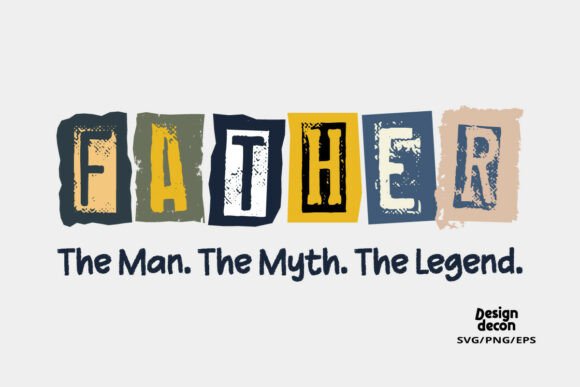
Father the Man the Myth Collage Tee SVG Review
As a designer who spends half my life staring at stitch density charts and the other half troubleshooting tension issues on vintage machines, I don’t just look at a design file; I look at how it will behave under the needle. When I first pulled up Father the Man the Myth Collage Tee SVG, my immediate reaction was less about the text and more about the composition. It’s a retro vintage aesthetic that feels familiar yet distinct enough to stand out in a crowded marketplace. For those of us in the Crafts and Graphics sectors, finding a balance between nostalgia and modern clarity is tricky. This file seems to hit that sweet spot, but like any machine embroidery design, its success depends entirely on execution.
The First Impression: Mood and Layout
The visual personality of this embroidery project leans heavily into classic Americana vibes. The phrase "Father the Man the Myth" is bold, confident, and instantly recognizable. From a design standpoint, the layout is structured to hold attention without overwhelming the eye. It doesn’t scream for help with excessive details or cluttered backgrounds. Instead, it relies on strong typography and clean lines, which is a huge plus when translating vector art into thread.
I immediately envisioned this on a heavyweight cotton sweatshirt for a boutique Father’s Day collection. The retro vibe pairs perfectly with washed black or heather grey fabrics. It feels like a piece of custom apparel that a customer would wear proudly, not just as a gift, but as a statement of identity. The collage aspect suggests a layered look, which can be achieved beautifully through strategic thread colors and perhaps some contrasting satin stitch borders if you are adding embellishments. It has a professional polish that elevates it above basic clip-art styles, making it suitable for serious commercial embroidery work.
Real-World Application: Where It Shines
In my experience, the best designs are versatile. This embroidery file isn’t limited to just one type of product. While the title says "Tee," limiting your imagination to t-shirts would be a mistake. Here is where I see this design performing exceptionally well in real-world scenarios:
- Sweatshirt Embroidery: The chunky, retro font works beautifully on thick knit fabrics. The texture of the fabric complements the boldness of the design, ensuring the stitches have something substantial to grip onto.
- Tote Bag Design: Canvas totes are a staple for Etsy sellers. Placing this centered on a natural canvas bag creates a striking contrast. It’s practical, durable, and highly giftable.
- Embroidered Patch: If you trim the edges and add a sturdy backing, this could easily serve as a detachable patch for denim jackets or backpacks. This adds value by allowing the buyer to customize their own gear.
- Kitchen Towels and Aprons: For the dad who grills or cooks, placing this on a high-quality linen apron or a heavy-duty tea towel makes for a thoughtful personalized gift. The retro theme fits well in farmhouse-style kitchens.
- Baby Embroidery: Interestingly, this isn't just for adults. A smaller version on a baby onesie or burp cloth, perhaps reading "Daddy's Little Myth," could be a charming variation for new parents.
When creating printable mockups for your design assets, imagine these items in lifestyle settings. A coffee mug next to a tote bag, or a sweatshirt draped over a chair. These visuals help potential buyers see the finished product in their own lives, boosting conversion rates for your craft business.
Technical Considerations and Pitfalls
Not every surface is created equal, and even the best digital embroidery file can fail if applied incorrectly. Before committing to a full production run, there are several areas where you need to exercise caution.
First, consider the hoop size. While the source files are high-resolution (3600×3600 px), you must ensure your machine can handle the final scaled dimensions without hitting the limits of your hoop. If you are working on curved surfaces like caps or hats, the flat nature of the original design might distort slightly during stitching. You may need to adjust the placement or use a specialized cap frame to maintain alignment.
Another critical factor is stitch density. Retro designs often rely on solid fills to create impact. If the density is too high, the fabric may pucker, especially on thinner materials like poly-blend tees or delicate shirts. Always test on scrap fabric that matches the weight and stretch of your final material. If you are using stretchy fabric, a rigid fill stitch might cause the garment to lose its shape after washing. In such cases, reducing the density or switching to a combination of running stitch and sparse fill stitch might preserve the drape of the fabric.
Also, pay attention to small details. If the design includes tiny text or intricate decorative accents, ensure they remain legible after stitching. On textured fabrics, fine details can get lost. I recommend converting your design to a black-and-white preview before stitching to check for contrast and clarity. If the elements blend together in grayscale, they will likely merge into a muddy mess in color.
Material and Stabilizer Choices
The choice of stabilizer is just as important as the thread. For woven fabrics like cotton or canvas, a cut-away stabilizer provides the necessary support to prevent shifting. For knits, a tear-away might suffice for lighter designs, but a wash-away could be better if you want no residual stiffness. Never skip the stabilizer step; it is the backbone of a clean embroidery project.
When selecting thread colors, stick to high-contrast combinations. Black thread on dark fabric is risky unless you are using a metallic or matte finish that catches the light differently. White or gold thread on black fabric is a classic choice that ensures readability. Remember, the goal is for the recipient to read the message clearly from a distance.
Final Verdict for Designers and Sellers
Father the Man the Myth Collage Tee SVG is a solid addition to any designer’s library. It offers a timeless theme that resonates emotionally with customers looking for meaningful holiday embroidery gifts. Its versatility allows it to span across multiple product categories, from small shop products to larger commercial runs.
However, success lies in the details. Test rigorously. Check your thread colors against your fabric. Confirm whether the licensing allows for commercial embroidery sales if you plan to sell the finished items. By paying attention to these technical nuances, you transform a simple graphic into a premium handmade product that builds trust and encourages repeat business. For the savvy maker or creative entrepreneur, this design is worth the investment of time and testing.