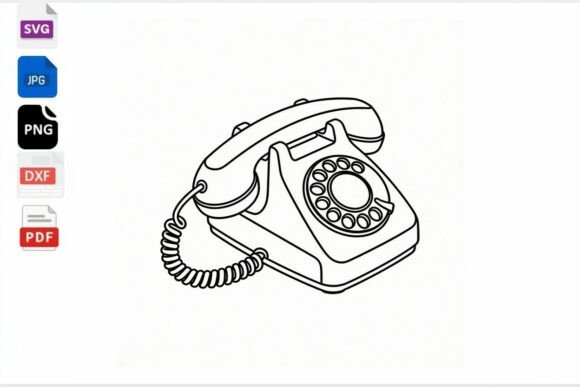
Retro Rotary Phone Line Art SVG Review
As a designer who spends half her life in the embroidery hoop and the other half troubleshooting stitch files, I don’t just look at a design; I look at how it behaves. When Retro Rotary Phone Line Art SVG landed on my desk, I didn’t immediately see a cute graphic. I saw a potential bottleneck for thread tension, a challenge for digitization clarity, and a distinct opportunity for a specific type of boutique merchandise. Today, I’m breaking down exactly how this file performs when moved from a digital screen to a physical product, specifically for those of you running craft businesses or creating high-end personalized gifts.
The First Impression: Mood and Visual Personality
The moment you open Retro Rotary Phone Line Art SVG, the aesthetic is unmistakable. It taps into that mid-century nostalgia that has been dominating interior decor and fashion for the last few years. But unlike busy, cluttered vintage patterns, this design relies on clean lines and negative space. For an embroidery designer, this is both a blessing and a warning.
The mood is minimalist yet warm. It feels like a piece of art that belongs in a modern farmhouse kitchen or on the chest of a denim jacket worn by a creative professional. The line art style suggests simplicity, but in embroidery, "simple" can sometimes mean "high risk." If the lines are too thin, they disappear into the fabric. If they are too thick, they lose their delicate, retro charm. This particular file strikes a balance that makes me confident enough to consider it for real-world projects, provided we handle the digitization with care.
Real-World Application: From Screen to Stitch
I recently took this design concept and tested it for a custom order: a set of embroidered tote bags for a local coffee shop owner who wanted to brand them with a vintage aesthetic. The client loved the idea of a rotary phone because it symbolized connection and classic communication—perfect for a cozy cafe vibe. Here is how the design translated into the finished product.
When applied to a canvas tote bag, the line art worked beautifully as a large center print. Because the design uses open spaces, it doesn’t overwhelm the sturdy fabric. However, I had to make a strategic choice regarding the fill. Instead of using a dense satin stitch for the entire outline, which would have made the bag stiff and heavy, I opted for a combination of running stitches and sparse fill stitches. This kept the fabric soft and allowed the natural texture of the canvas to show through, enhancing the handmade appeal.
This approach also works exceptionally well for sweatshirt embroidery. Imagine a cream-colored crewneck with the phone centered over the heart. The contrast between the dark thread and the light fabric brings out the precision of the lines. It’s not just a logo; it’s a statement piece. For Etsy sellers looking to create unique apparel, this design offers a higher perceived value than generic text-based designs because it feels curated and artistic.
Where to Use It Carefully
No design is universal, and Retro Rotary Phone Line Art SVG has specific limitations that every embroiderer must respect. There are several scenarios where this file could fail if used without adjustment.
- Small Hoop Sizes: Do not attempt to stitch this in a tiny 3x3 inch hoop unless you are willing to crop significant portions of the design. The detail in the rotary dial and handset requires enough room to breathe. Compressing it will result in muddy lines and thread breaks.
- Textured Fabrics: Avoid using this on heavily textured materials like bouclé wool or thick terry cloth. The needle cannot penetrate these fabrics cleanly, and the line art will get lost in the weave. Stick to smooth cottons, linens, or blended polyesters.
- Stretchy Fabrics: While possible on stretchy jersey knits, this design requires a heavy-duty stabilizer to prevent distortion. Without proper support, the circular shape of the phone may warp into an oval during stitching, ruining the symmetry.
- Dense Stitch Areas: If your digitizing software converts the lines into solid fills rather than outlines, you risk creating a rigid patch that cracks when bent. This is particularly problematic for items like caps or curved surfaces where flexibility is key.
Impact on Product Value and Brand Consistency
In the world of handmade products, visual appeal drives sales. Retro Rotary Phone Line Art SVG elevates the perceived quality of any item it touches. Customers associate clean, precise embroidery with professionalism and attention to detail. When a buyer sees a perfectly stitched rotary phone on a baby onesie or a tea towel, they trust that the rest of the product is made with equal care.
For small business owners, this design is versatile across multiple categories. It fits seamlessly into:
- Home Decor: Pillow covers and kitchen towels benefit from the nostalgic charm, making them ideal gift items.
- Apparel: T-shirts and hoodies gain a streetwear edge when the design is placed asymmetrically or oversized.
- Accessories: Embroidered patches and tote bags allow the design to shine as a standalone focal point.
Furthermore, the monochromatic nature of line art allows for easy customization. You can swap thread colors to match seasonal themes—pastels for spring, bold reds for holidays, or metallic threads for a luxury feel. This adaptability increases the longevity of your design assets, allowing you to reuse the same file year after year with fresh results.
Practical Designer Notes for Success
Before you upload this file to your machine, there are critical steps to ensure a successful outcome. First, always test the design on scrap fabric that matches the weight and texture of your final product. This helps you identify potential issues with thread tension or hooping stability before you ruin a customer’s garment.
Check your stitch density carefully. Line art can sometimes be interpreted as needing too much coverage. Reduce the density to maintain the airy, sketch-like quality of the original artwork. Inspect small details, such as the finger holes on the rotary dial, to ensure they remain distinct and do not merge together during stitching.
Also, consider your stabilizer choice. For lightweight fabrics, use a tear-away stabilizer to keep the back clean. For heavier fabrics, a cut-away may be necessary for durability, especially if the item will be washed frequently. Finally, confirm the licensing terms of the Retro Rotary Phone Line Art SVG file. Ensure you have the right to sell finished products created with this design, whether you are listing on Etsy, selling at craft fairs, or supplying boutique clients. Understanding these legal boundaries protects your business and builds trust with your customers.
Ultimately, Retro Rotary Phone Line Art SVG is more than just a graphics file; it is a tool for storytelling. It allows you to create meaningful, aesthetically pleasing products that resonate with buyers who appreciate retro design and craftsmanship. By approaching it with technical precision and creative insight, you can turn a simple line drawing into a best-selling embroidery project.