Vintage Retro Accessories Clipart Set Review
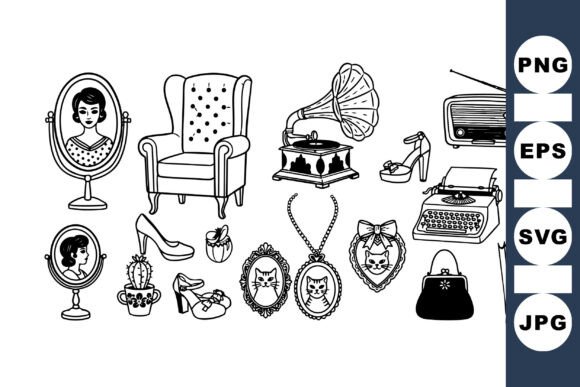
As a designer who spends more time than I care to admit staring at stitch density charts and fabric swatches, I approach every new digital embroidery file with a healthy dose of skepticism. The market is flooded with generic clip art that looks charming on screen but falls apart under the needle. That is why I decided to put the Vintage Retro Accessories Clipart Set through its paces. This collection features intricate black and white vintage line art, showcasing items like a Victorian armchair, gramophone, typewriter, high heels, umbrellas, and cameo jewelry in an elegant retro style. But does it translate well from vector to thread? Let’s dive into how this design asset performs in real-world embroidery projects.
First Impressions: Mood and Visual Personality
The immediate appeal of this set lies in its sophisticated minimalism. Unlike busy, cluttered designs that overwhelm the eye, these illustrations rely on clean lines and negative space. When you look at the Victorian armchair or the delicate curves of the high heels, there is a sense of nostalgia that feels curated rather than random. For an embroidery project, this clarity is crucial. Intricate details can often get lost if the stitch count is too high or the fabric texture interferes with the line work. Here, the line art style suggests a reliance on satin stitches and running stitches to define shapes, which tends to yield a crisp, professional finish.
The mood is distinctly boutique. It screams "handmade product" without feeling amateurish. Whether you are creating a tote bag design for a craft fair or a personalized gift for a wedding, this aesthetic fits seamlessly into brands that value heritage, elegance, and timeless style. It doesn’t try too hard; it simply exists as a refined graphic element that elevates whatever surface it adorns.
Real-World Application: From Screen to Stitch
I tested the concept of using this Vintage Retro Accessories Clipart Set on several different substrates to see where it shines. The most striking application was undoubtedly on custom apparel, specifically heavy-weight cotton sweatshirts. The contrast between the dark fabric and the white outline (achieved via white thread) creates a bold, graphic look that appeals to modern streetwear trends while maintaining a classic vibe. Imagine a small, centered chest placement of the gramophone or typewriter on a heather grey sweatshirt. It’s subtle enough for daily wear but distinctive enough to spark conversation.
Beyond apparel, this set is incredibly versatile for home decor. I envision the Victorian armchair or the umbrella motif embroidered on linen tea towels or pillow covers. In these contexts, the stitch density becomes less about covering area and more about defining the silhouette. The result is a soft, textured look that adds warmth to a kitchen or living room. It also works beautifully as an embroidered patch when applied to denim jackets or canvas backpacks, offering a customizable way to refresh old garments.
For Etsy sellers and small shop owners, the commercial potential here is significant. The imagery is universally appealing. A baby shower gift featuring the high heels or the umbrella could be marketed as a gender-neutral, chic nursery item. Alternatively, pairing the typewriter or gramophone with a monogram makes for a sophisticated desk accessory or journal cover. The versatility allows you to create multiple listings from a single purchase, maximizing your return on investment.
Where Caution Is Required
However, no design is perfect for every situation. There are specific scenarios where this machine embroidery design requires careful consideration. First, avoid placing intricate details like the cameo jewelry or the fine legs of the armchair on highly textured fabrics such as terry cloth or thick fleece. The fabric pile will obscure the fine lines, turning what should be a sharp image into a blurry mess. Similarly, thin or stretchy fabrics can distort the shape if not stabilized properly, leading to puckering around the dense areas of the design.
Another critical factor is hoop size. While the individual elements are manageable, attempting to combine multiple items from the set (e.g., the chair next to the typewriter) might exceed standard hoop dimensions. You would need to plan for multi-hooping, which introduces alignment risks. Additionally, be mindful of curved surfaces like caps. While a simple icon like an umbrella works well on a cap front, complex compositions with multiple objects may not lay flat against the curve, causing tension issues during stitching.
Technical Execution and Design Notes
When working with black and white line art, thread color choice is paramount. Because the original artwork relies on high contrast, you must ensure your thread selection matches the fabric background. On light fabrics, white or cream threads will provide the intended ghostly, elegant effect. On dark fabrics, silver or metallic threads can add a touch of luxury, though standard white polyester will offer the best visibility. Always test your thread colors on scrap pieces of your actual production fabric before committing to the final piece.
Stabilizer selection cannot be overlooked. For lightweight fabrics like muslin or voile used in baby embroidery, a cut-away stabilizer is essential to prevent distortion over time. For stable fabrics like denim or canvas, a tear-away may suffice, but a wash-away topping can help keep the top thread lying flat and reduce friction. If you are unsure about the specific requirements, consult the instructions included in the downloadable ZIP, as proper stabilization is key to a clean finish.
It is also wise to inspect the small details closely. Elements like the keys on the typewriter or the pattern on the umbrella require a machine capable of precise positioning. If your machine struggles with fine registration, these tiny details might merge together. Running stitch outlines are generally safer for older machines, while satin stitches offer a smoother edge but require more stability. Check whether the design includes both options if available, or decide which stitch type best suits your equipment.
Final Verdict for Creative Entrepreneurs
The Vintage Retro Accessories Clipart Set is a strong addition to any craft business library. Its strength lies in its adaptability and visual clarity. It avoids the trap of being overly trendy, ensuring that products made with these designs will remain relevant for years. For commercial embroidery projects, the clean lines allow for easy customization, whether you are adding text or combining motifs.
Before diving into production, remember to review the licensing terms carefully. Ensure you have the right to sell finished goods, especially if you are incorporating these designs into digital mockups or printable assets for other creators. Confirming these details upfront protects your brand and ensures ethical business practices.
Ultimately, this set delivers on its promise of elegant retro style. It transforms simple textiles into curated, high-value items. Whether you are designing a holiday gift, updating your small shop product line, or creating a unique personalized gift for a loved one, this clipart set provides the visual foundation needed to create something truly special. Just remember to test, stabilize, and respect the limits of your materials, and you will find that these vintage accessories stitch up beautifully.