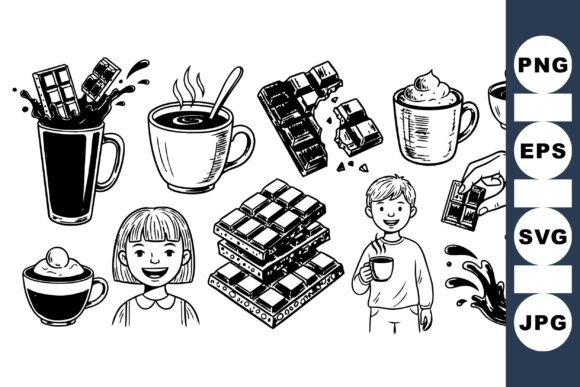
Vintage Hot Chocolate Clipart Set
When I sit down to review a new embroidery file, I am rarely looking for just another pretty picture. I am looking for viability. I need to know if a design will hold up under the needle, if it translates well from screen to fabric, and most importantly, if it adds enough perceived value to justify the time it takes to hoop, stitch, and finish a handmade product. Recently, I pulled the Vintage Hot Chocolate Clipart Set into my workflow to test its potential for real-world application. This collection of Graphics features vintage black and white vector art of chocolate bars, splashes, and happy kids drinking steaming hot coffee cups with detailed line work in retro style. At first glance, it looks like a simple aesthetic choice, but as an experienced designer, I see layers of strategic opportunity—and some specific pitfalls that every crafter must navigate.
The First Impression: Mood and Market Fit
The immediate appeal of this machine embroidery design lies in its nostalgic warmth. We are currently seeing a massive surge in demand for "cozy" aesthetics in the craft market. Customers are moving away from hyper-modern, minimalist designs and gravitating toward items that evoke comfort, childhood memories, and slow living. The Vintage Hot Chocolate Clipart Set taps directly into this emotion. The inclusion of steaming cups and splashing liquid suggests movement and warmth, which is a powerful psychological trigger for buyers browsing Etsy or local craft fairs.
From a branding perspective, this set works exceptionally well for small businesses targeting families, cafes, or holiday markets. It feels personal. It feels like a gift. When you look at the individual elements—the chocolate bars and the happy kids—you realize these aren't just random icons; they are narrative components. A child holding a mug tells a story. A splash of liquid implies action. For a custom apparel decorator or an Etsy seller, this means you aren't just selling a shirt; you are selling a feeling of winter comfort. This emotional connection is what drives higher conversion rates and repeat customers.
Real-World Application: Where This Design Shines
I have been testing how this digital embroidery file performs across various substrates, and there are clear winners here. The strongest use case is undoubtedly the tote bag design category. Canvas bags are sturdy, provide a large flat stitching area, and are perfect for displaying the detailed line work of the retro style. Imagine a cream-colored canvas tote featuring a central image of a child sipping hot cocoa, surrounded by scattered chocolate bar illustrations. It is classic, timeless, and highly giftable.
Beyond totes, this design excels on sweatshirt embroidery projects. The chunky nature of fleece or cotton-blend hoodies complements the bold lines of the vector art. During the colder months, especially around Thanksgiving and Christmas, a holiday embroidery piece featuring this theme can become a bestseller. Parents love buying matching family pajamas or sweatshirts for photo ops, and this design provides that exact visual cue. It also translates beautifully to aprons for home bakers or coffee enthusiasts. The vintage vibe pairs naturally with rustic kitchen decor trends.
For those in the craft business, consider the embroidered patch market. If you trim the artwork appropriately and add a clean border, these images make excellent iron-on patches for denim jackets or backpacks. The retro color palette (even if stitched in monochrome) fits perfectly with the current streetwear and utility fashion trends. Additionally, for small shop product lines, these designs work well on kitchen towels and pillow covers. The vertical orientation of many clipart elements suits standard towel dimensions nicely, allowing for elegant placement near the hem.
Technical Considerations and Potential Pitfalls
While the artistic merit is high, we must talk about the technical execution. The description notes "detailed line work," which is a double-edged sword in embroidery. Fine details can get lost depending on your stitch density and thread choice. If you attempt to stitch this on a textured fabric like bouclé or a very thin, sheer material, the definition will suffer. The needle penetration might distort the fabric, causing the fine lines of the chocolate wrapper or the steam from the cup to blur together.
I strongly advise against using this design assets package for tiny applications. Do not attempt to stitch the full detail onto a standard baseball cap front panel unless you are scaling it down significantly, and even then, be cautious. On curved surfaces like caps, tension issues can arise, leading to puckering. If you are working with dark fabric, you will need to choose your thread colors wisely. While the original art is black and white, stitching pure black on navy blue can result in low contrast. Conversely, white thread on light grey can wash out the intricate details. Always test for contrast before committing to a production run.
Another critical factor is the hoop size. Ensure your digitizing software allows you to adjust the frame to fit your specific machine's capabilities without distorting the aspect ratio. If the design is too wide for your hoop, you may need to split it or re-digitize it, which changes the final look. Also, pay attention to the stabilizer choice. For stretchy fabrics like jersey knit used in baby clothes, a cut-away stabilizer is non-negotiable to prevent the design from warping over time. Wash tests are essential here, as repeated laundering can loosen stitches if the backing isn't secure.
Practical Designer Notes for Success
- Test on Scrap Fabric: Never assume a digital preview matches the physical output. Stitch a sample on the actual fabric you plan to sell. Check for thread breaks, tension balance, and clarity of small details.
- Review Stitch Density: High-density areas can make the fabric stiff and uncomfortable, especially on baby embroidery items. If the fill stitch is too heavy, consider converting some areas to satin or running stitch for a softer hand feel.
- Inspect Small Details: Zoom in on the vector art. Are the eyes of the kids distinct? Is the texture of the chocolate bar readable? If details are too fine, simplify the design in your editing software before stitching.
- Check Licensing: Before listing any commercial embroidery items, verify the license terms. Some clipart sets allow personal use only, while others permit commercial sales of finished goods. Confusion here can lead to legal issues and loss of customer trust.
- Create Printable Mockups: Use the JPG files to create realistic mockups for your online store. Show the design on a cozy sweater or a rustic mug. Visual context helps buyers imagine the finished product in their own homes.
Final Verdict on Visual Appeal and Value
The Vintage Hot Chocolate Clipart Set is more than just a decorative element; it is a mood setter. It brings a sense of professionalism and thoughtfulness to any embroidery project. When executed correctly, it elevates a basic commodity item into a curated, boutique-quality good. The retro style ensures longevity, as vintage aesthetics tend to remain popular across seasons rather than fading quickly like fleeting trends.
However, success depends entirely on your technical approach. Treat this graphics package with respect. Understand its limitations regarding scale and fabric type. By focusing on high-quality materials, proper stabilization, and thoughtful placement, you can leverage this design to create memorable personalized gifts and profitable merchandise. Whether you are making a one-off custom apparel piece for a client or building a catalog of craft business staples, this set offers a strong foundation for creating products that resonate emotionally with buyers. Just remember: the magic happens in the stitching, not just the drawing. Test thoroughly, stitch carefully, and let the nostalgia do the rest.